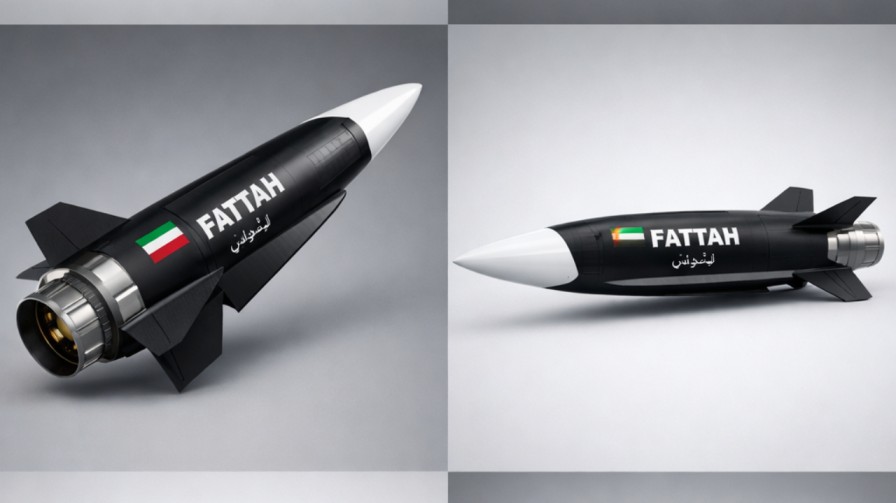
Iran Hypersonic Missile, New Game-Changing Hypersonic Missile
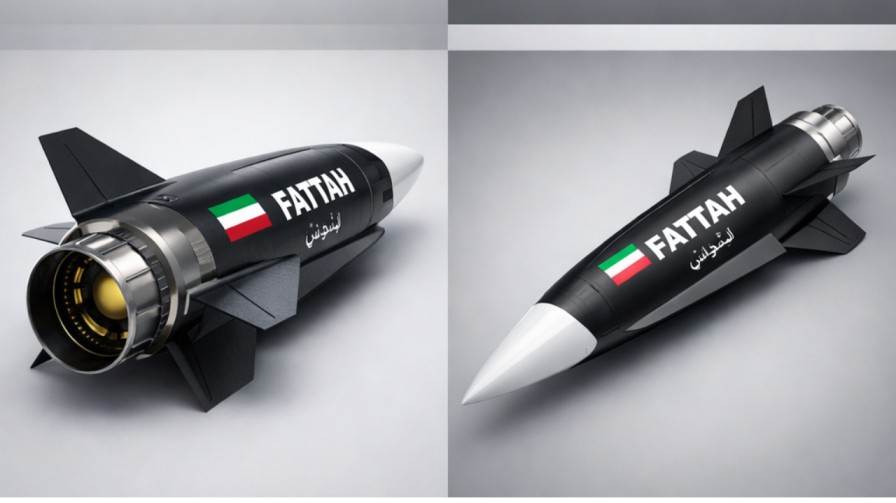
Tanks and fighter jets are no longer the defining features of a modern battlefield. Today, the strongest weapons move faster than sound, can tear apart targets with extraordinary precision and are almost impossible to intercept. Iran’s hypersonic missile program has probably gotten more global notice, particularly the Fattah‑1 hypersonic missile and its advanced successor Fattah‑2 hypersonic missile.
The missile attacks were released on the first anniversary of Iran’s killing of Iranian General Qassem Suleimani in a drone strike ordered by President Donald J. Trump, and under growing tensions across the region amid the ongoing geopolitical shift at play. With fighting escalating and great powers observing the conflict closely, Iran has put its hypersonic weapons on the table as one of the most consequential changes to modern warfare.
The article below examines the technology, significance and current state of affairs regarding Iran’s hypersonic missile capabilities.
The Rise of Hypersonic Weapons
Hypersonic weapons are a revolutionary step in military technology. Unlike conventional missiles, which fly along predictable ballistic trajectories, hypersonic missiles travel at extraordinarily high speeds while allowing weapons to maneuver unpredictably in flight.
A missile traveling faster than Mach 5, or five times the speed of sound — more than 6,000 kilometers per hour — is generally defined as hypersonic.
The real danger of these weapons is their ability to combine extreme speed, maneuverability and precision. That makes them extremely challenging for conventional missile defense systems to detect, track or intercept.
The United States, Russia, and China have all spent years working on hypersonic technology. Now Iran is saying it has joined those elite ranks with the development of so-called Fattah series missiles.
The Fattah Hypersonic Missile: A Strategic Breakthrough for Iran
The Fattah-1 hypersonic missile was introduced to the world in 2023 as part of Iran’s rapidly expanding range of missiles. The missile is said to reach speeds of Mach 13-15 or approximately 15,000–18,000 km/h.
It has an estimated operational range of approximately 1,400 kilometers, enabling it to hit targets throughout the Middle East.
Key features include:
- Capable of hypersonic speeds above Mach 13
- A hypersonic glide vehicle which can change direction during flight
- Solid-fuel propulsion for quick launch readiness
- Advanced guidance systems intended to penetrate missile defenses
- Thanks to these features, Iranian officials say the missile can avoid detection from even the most advanced anti-missile systems.
- Military analysts disagree on whether these claims are entirely accurate. But even skeptics agree that Iran has made significant strides in missile technology in the past decade.
The Next Generation: Fattah-2
Iran subsequently revealed the Fattah-2, a development which was described as an improved variant that is believed to be even more sophisticated.
It is said to boast superior maneuverability, and perhaps even a hypersonic glide vehicle design, where the weapon glides through the atmosphere and makes unpredictable turns.
The missile now boasts a 1,400 kilometer range that could go far beyond following upgrades.
Hypersonic glide vehicles are regarded as one of the most difficult threats to modern defensive systems. Unlike traditional ballistic missiles that follow a high arc, glide vehicles remain within the atmosphere and maneuver unpredictably so they are extremely difficult to track.
Today: New Tensions in the Middle East
Iran’s hypersonic missiles have become a greater focus for the world in light of the current escalation between Iran, Israel, and U.S. forces in the region.
Reports have also suggested that Tehran used advanced hypersonic missiles, which Iran claimed to have successfully utilized in retaliatory strikes amid the ongoing military conflict.
Such developments have alarmed military analysts and governments around the world. Hypersonic missiles can cut reaction time for defense systems down to seconds. Defenders may have only seconds to respond to a missile launch, rather than several minutes.
New variants of the missile, as some reports suggest, may be almost impossible for current missile defense systems to track and intercept without major upgrades.
This calls into question the effectiveness of systems like missile shields and regional air defenses.
Impact on Global Military Strategy
The development of hypersonic missiles by Iran may dramatically alter the strategic landscape in the Middle East.
Iran’s primary deterrent against stronger regional air forces for decades was ballistic missiles. Now, hypersonic technology could augment that deterrence by adding weapons that are faster and more difficult to stop.
Military analysts say those missiles could pose a threat to:
- Military bases in the Middle East
- Strategic infrastructure
- Armed ships in the Persian Gulf
- Regional missile defense networks
Iran already has one of the largest missile arsenals in the region, with weapons capable of reaching targets thousands of kilometers away.
Hypersonic technology adds a game-changing strategic dimension to this arsenal.
Challenges Facing Iran’s Missile Program
Iran’s missile program, however, does face major technical hurdles despite technological advances.
Recent military strikes have focused on facilities to produce and launch missiles. Satellite imagery has shown damage to key missile production facilities near Tehran, according to reports.
Such strikes could delay Iran’s capacity to produce or deploy sophisticated missiles.
Missile launchers themselves have also become prime targets. Mobile launch crews must rapidly deploy missiles and then displace before enemy forces catch on.
This cat-and-mouse dynamic underscores the high-stakes pressure surrounding missile warfare in the region.
The Debate: Boost or Political Message?
Not everyone agrees that Iran’s hypersonic missiles are as revolutionary as they’ve been made out to be.
Some analysts contend that many ballistic missiles already achieve hypersonic speeds at various stages of their flight.
Others argue the main difference is maneuverability — the ability to shift heading at very high speed.
If Iran’s missiles are genuinely capable of such maneuvering while traveling at Mach 10 or more, they would mark a major technological leap.
But it is hard to verify the claims because much of the data has come from government statements — not independent testing.
Global Reaction
Iran’s hypersonic missile program has elicited heated responses worldwide.
The United States and Israel, among other countries, see the development as a possible threat to regional security. Other nations, though, view it as one facet of a much broader global arms race involving hypersonic weapons.
Russia and China already have some version of these systems in place, while the United States is still testing various hypersonic models.
The spread of this technology begs the question of a world with missiles that can hit targets anywhere in the world within minutes.
The Future of Hypersonic Warfare
Hypersonic missiles are a new kind of boat pokemon.
These weapons could change the ways wars are fought by:
Time is everything when it comes to weapons defense systems
Reducing the effectiveness of traditional missile shields
The role of early detection and space-based sensors becomes more significant
Speeding the global arms race on advanced weapons
Iran’s Fattah missile system is only one case of this fast-adapting technology.
Whether these weapons will actually alter the balance of power meaningfully, or are largely symbolic in nature, remains to be seen and will depend on future developments and performance on real world battlefields.
Conclusion
Iran’s new hypersonic missile program has rapidly crowded to the top of the list of military developments most discussed around the world. The Fattah-1 and the Fattah-2 missiles represent a significant advancement in Iran’s military technology and its drive to bolster deterrence against regional competitors.
With top speeds of up to Mach 15, advanced maneuverability and the ability to evade many modern defense systems, these are a new generation of strategic weapon.
Yet the continuing conflict in the Middle East and strikes on missile infrastructure demonstrate how fragile and volatile conditions still are.
One thing is certain: the age of hypersonic warfare has already arrived, and the world holds its breath as countries compete to demonstrate who can wield the fastest weapon ever developed.

